What Do I Do With My Outdoor Plants When It Gets Cold?
The temps start to drop, you grab a sweater…and then it hits you: what about the plants?!
If you’ve ever wondered which ones to bring inside, which ones will survive, and what you can do to help them through the cold, this one’s for you.
Here’s a simple, homeowner-friendly guide to caring for your outdoor plants when the weather turns chilly.
1. Know Who Can Handle the Cold (and Who Can’t)
Not all plants are created equal when it comes to cold weather.
Generally:
Annuals (like many summer flowers) live for one season. Once a hard frost hits, they’re usually done.
Perennials come back year after year. They may die back on top, but their roots survive underground.
Potted/Container plants are more vulnerable than plants in the ground, because their roots are more exposed to freezing temps.
Tropical plants (palms, some houseplants you put outside for summer, etc.) cannot handle frost and need to come indoors.
If you still have plant tags or can look up the name of your plant, check:
Is it hardy in your area?
What’s the lowest temperature it can tolerate?
2. Bring In the Ones That Hate the Cold
Some plants are basically summer vacationers and need to come back inside when temps start hitting the 40s–50s at night, especially if frost is in the forecast.
Good candidates to bring indoors:
Tropical plants and palms
Houseplants you moved outside for the summer
Herbs in pots you want to keep (basil, rosemary, etc.)
Any favorite container plants you’re not ready to say goodbye to
Before bringing them in:
Check for bugs (look under leaves and around soil).
Gently rinse leaves if needed.
Trim off dead or damaged growth.
Place them near a bright window and expect a little adjustment period—they might drop some leaves as they get used to lower light indoors.
3. Protect Perennials & Shrubs Outdoors
Your hardy perennials and shrubs can usually stay outside, but they’ll appreciate some extra care.
Mulch is your friend:
Add a 2–3 inch layer of mulch around the base of plants (but not piled against the trunk or stems).
Mulch acts like a blanket, helping regulate soil temperature and protect roots from freeze/thaw cycles.
For more tender plants:
Use burlap, frost cloth, or old sheets to cover them on nights with hard freezes.
Create a simple “tent” so the cover isn’t crushing the plant.
You don’t have to wrap your entire yard—focus on the plants you know are borderline hardy or newly planted.
4. Container Plants: Decide Who Stays and Who Goes
Potted plants are more vulnerable because cold reaches the root ball faster.
You have a few options:
Option 1: Move them to a protected spot
Slide pots closer to the house, under a covered porch, or into a garage/shed when very cold.
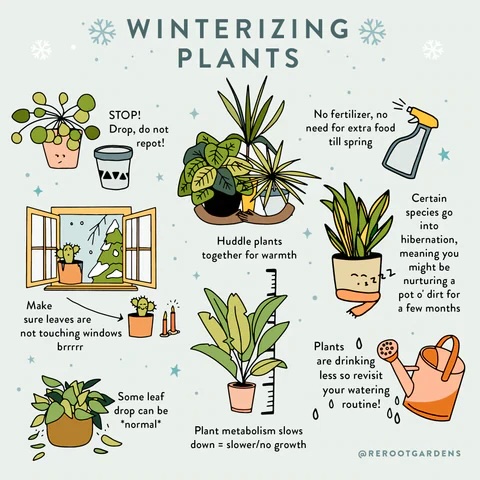
Group pots together for added protection.
Option 2: Insulate the pots
Wrap plastic or burlap around the pot.
Add extra mulch on top of the soil.
Option 3: Bring them inside
If the plant isn’t cold-hardy at all, treat it like a houseplant for the winter.
5. Adjust Watering as Temperatures Drop
Plants don’t need as much water in cooler weather.
In the ground: Water deeply but less often. You still want roots hydrated going into a freeze, but not soggy.
In pots: Let the top inch of soil dry out before watering again. Cold + wet = root rot risk.
On very cold days, avoid watering late in the evening so plants aren’t sitting in cold, wet soil overnight.
6. Cut Back, Clean Up, or Let It Be?
Not everything has to be chopped down the minute it turns brown.
You can cut back:
Dead annuals you’re done with
Perennials that are completely dried out and floppy
You might choose to leave:
Ornamental grasses and plants with pretty seed heads (they look nice in winter and can feed birds).
Also take a few minutes to:
Pull out weeds
Remove dead, mushy plant material around the base (helps prevent disease)
7. Plan Ahead for Next Year
As you tuck your plants in for winter, it’s a good time to think ahead:
Which plants thrived?
Which ones struggled?
Do you need more low-maintenance perennials and fewer fussy annuals?
Would raised beds, better soil, or irrigation help?
Snap a few photos and make a quick note in your phone. You’ll be glad you did when spring rolls around and garden centers are tempting you again!
Bonus: Plants & Curb Appeal
Healthy, well-cared-for landscaping doesn’t just make you happy now—it also boosts curb appeal if you ever decide to sell.
Clean beds, mulched plants, and tidy shrubs send a strong “this home is well cared for” message.
Even in colder months, a few evergreen plants, simple décor, and neat beds can make a big difference.
Have Questions About Your Yard Before You Sell?
If you’re thinking about selling in the next year or two and wondering which outdoor projects actually matter for buyers (and which ones you can skip), we’re happy to give honest, practical advice.
We can:
Walk through your property and suggest simple, cost-effective updates
Help you decide what to keep, trim, or replant
Connect you with local landscapers if you want help
📩 Thinking about a move and not sure where to start—with your plants or your property? Reach out anytime. We’re here to help you protect, enjoy, and maximize your home, in every season.